Monday, March 5, 2007

Soundtrack of our Lives


Perhaps we should do more work on the importance of music in film narratives. Anthony commented in his log this week that upon re-viewing The Inner Life of a Cell, the importance of musical cues was made more than obvious to him.

I just downloaded one of my favorite soundtracks to my iPod: Bernard Herrmann's score for The Day the Earth Stood Still. The Day the Earth Stood Still was the first science fiction film I ever saw and I can't emphasize enough what an impression it made on me at a very young age---and most of that impression was via the soundtrack. To say those sounds haunted me is not even close to the effect they had.

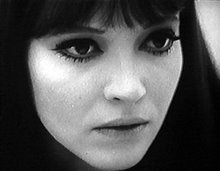
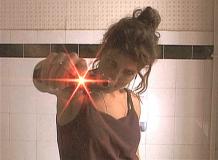
Herrmann is one of the classic soundtrack composers, forming in my mind a trinity with George Delarue and Peer Raben. (While I respect Herrmann's overall achievements, my heart is more truly given to Raben and Delarue. Raben for his entire work with Fassbinder and Delarue for the single most important cinema music in my life: the score to Godard's le Mepris. Two stills from it have pride of place on the right hand side of this blog, followed by several images from Fassbinder's work).

Anyway, walking around Nassau today with everything scored to the anxiety-producing theremin tones of Herrmann's score was quite an otherworldly experience.

And in some ways very fitting.

Blog as Narrative


This week we will be looking at a film which is partially structured as a reverse linear narrative. I wonder if any of you have thought about the reverse chronology of the blog format as a narrative form?

The traditional blog format is a rolling log (no pun intended): a dated space to list information where the newest entry pushes the older entries down the list. When you read a blog, you either read through it as it is formatted: from most recent to least, or you scroll down to find the post you last read and then read from "bottom to top" so you can preserve chronology or see any cause and effect (sometimes important if one post is a commentary on a previous one).

Blogs are such a ubiquitous form on the internet (note the 60 million in the wikipedia article in the screenshot above) that I wonder if reverse chronology is becoming the new linearity.

Any thoughts?

Saturday, March 3, 2007

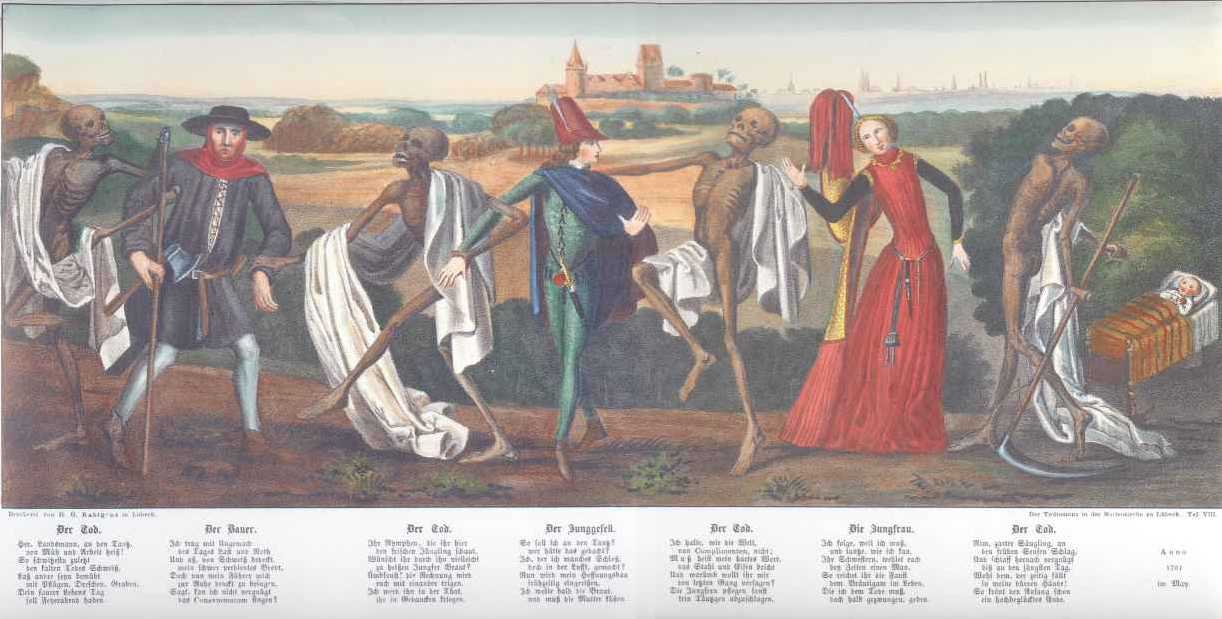
Memento Mori as emblem and concept


Above are some images of the memento mori, a visual trope in Western European art and culture alluded to in the title of Jonathan Nolan's short story. You can see both early renditions (including Hans Holbein's famous and famously bizarre memento mori from his painting titled, The Ambassadors. The original painting can be seen here, and the resolution of the anamorphism here) as well as a contemporary version as self portrait by Sarah Lucas.

The Latin term, memento mori, translated literally as "remembrance of mortality," or more colloquially as "remember you will die," linked with an ensemble of shorthand images for death, has been a leit motif in Western European religious art and tombstone design since medieval times. Examples of this tradition can still be seen in many graveyards, where older tombstones combine phrases like memento mori and hora fugit ("time flies") with images of hourglasses, skulls, and bones. Thus, passersby are asked to remember not only the deceased but their own mortality as well.

The emblem of the memento mori entered Western European religious art sometime after 1300. Not only did it make use of the pairing of the skull with some image of life (a flower, etc.) but was expanded into narrative forms as well. The common motif of "the Dance of Death" often featured skeletal figures leading people of every social class in a conga line of mortality. Other narrative paintings depicted a typical everyday routine interrupted by some striking reminder of the Big Narrative Closure---Death.

Coupled with religious sermons, the images have a clear meaning: life is short, you can't take it with you, so make sure you are living a good (Christian) life so you avoid hell and enjoy heaven. However, when memento mori images appear apart from explanatory sermons and verses, their signification can become ambiguous. Being reminded of one's mortality can lead in directions that Christian religious authorities would not approve: memento mori can easily become carpe diem. Because life is short, we should enjoy its pleasures while they last.

Christopher Nolan and Memento


Another thing that students can do before we watch Memento this coming Tuesday is read through some material on the director and his film. The wikipedia entry on Nolan is good, and here are two good interviews with him: one with the BBC, and one found on the Indiewire website. In the latter, Nolan discusses the generation of the "seed story" used by both him and his brother for narratives in different media:

"...my brother told me the concept when he was writing the story. He told it to me while we were driving from Chicago to LA, across country. And I was like great, can I go and write a screenplay for this while you write the story? Because he'd been doing draft after draft and in fact it took him another two years. As we were finishing the film, he was finishing his final draft of the short story.

We had decided that in our own ways we were going to try and tell the story in the first person. Me in film and him in a short story. We're both trying to escape the boundaries of the particular medium that we're choosing to tell, because we really want to create an experience that doesn't feed into your head, that bleeds around the edges. I was going for something that lived in its own shape, that was slightly built from that standard linear experience. My brother in the same way, in writing the story, had wanted to randomize it somehow. Like he's done the web site, [www.ontnemem.com] and that's in an electronic form."

Of interest here is Nolan's assertion that both he and his brother originally wanted to tell their stories in first person---of course, what they both eventually ended up with is something significantly more than a simple first person narrative...

Students should also check out this article by Andy Klein from Salon.com. Klein does a good job describing, as opposed to analyzing, the film's narrative structure. He has a good grasp of how the film is doing more than just using a reverse linear narrative. However, I think he gets horribly bungled up when he confronts the issue of "closure." Klein wants it all to "make sense" according to an internal logic, which in large part, both Klein and I agree it does. Where we part is over the idea that there is a single answer:

"Is there an answer? I don't know. Christopher Nolan claims there is one. In an article in New Times Los Angeles on March 15, Scott Timberg writes: "Nolan, for his part, won't tell. When asked about the film's outcome, he goes on about ambiguity and subjectivity, but insists he knows the movie's Truth -- who's good, who's bad, who can be trusted and who can't -- and insists that close viewing will reveal all."

But, at this point, I no longer believe him."

I think Klein for all his sensitivity to the layers of non-linearity in the film is still limited by the assumption that there is to be discovered some final perspective from which every contradictory detail makes sense. He doesn't seem to be able to think in different conceptual terms: that the film may be encoded with some puzzles that it does eventually offer solutions for and yet still resist a final authoritative Truth seems incomprehensible to him. Perhaps he is misled by what also seems to me a simplistic analysis in the New Times Los Angeles. I don't think Nolan would ever claim the film endorses the idea of a singular, capital T, authoritative truth. I suspect journalist Scott Timberg has also misunderstood whatever it was Nolan told him.

otnemem


One of the things students should do in preparation to this week's screening of Christopher Nolan's film, Memento, is look at the website Otnemem created by Jonathan Nolan. Ostensibly a website devoted to the film's original opening in 2001, it actually gives us a third rendition, in hypertext form, of the seed story: one that differs from both Christopher Nolan's film, and Jonathan Nolan's short story, "Memento Mori."

First essay assignment

Topic: Narrative Conventions

Using one of the two films we’ve seen in class (la Jetee, Distant Voices, Still Lives) write a brief discussion of how the film both makes use of and subverts basic narrative conventions.

We have talked in class about some conventions common to all narratives, both visual and written: narrative structure (how events are ordered), closure, mode of address, hierarchy of characters and point of view. We’ve also spoken about some conventions unique to film: the use of incidental sound, music, and editing. You do not have to discuss every one of this elements in your paper---pick the ones you find more most important or interesting in the film you are analyzing.

The basic point of this paper is to descriptively observe these features and begin to think about their effects. Think about how the use of these conventions position the viewer: to see some things, and not others, to pay close attention to some things, and less attention to others, to sympathize with a character, or not, to accept or agree with a particular way of looking at the world, etc. In other words, devote some time to reflecting on your own practices as a film viewer/reader: how they have been formed and how the film you are writing about may challenge them.
In order to make your points you may wish to make quick reference to other texts we’ve looked at in this class, such as the short story, “We Kill What We Love,” (for non-linear narrative), or maybe the animated video, The Inner Life of a Cell (for how music cues viewer perception) or even some of the work by Young Hae-Chang Heavy Industries (for differences between film and literature if you get that ambitious). You may also want to quickly describe a scene in a mainstream hollywood film as a point of comparison and contrast, too. These are all fine. But remember, for this paper you don’t have to do and “extra” research.

This assignment should be very simple on one level and very challenging on another. Although you are just looking and describing, you’re also looking at things that may have previously been invisible to you and describing things in a way that may be unfamiliar. Think of this first paper as a trial run: a place to “try out” some of the ideas we’ve been talking about in class, a place to “try out” your “new” observational skills.

Don’t forget to title your essay. A title is one of the elements which distinguishes a piece of formal writing from an informal series of notes. Your title should reflect something pertinent to your discussion. "Paper One," "Essay," "Film Paper," and the like are not adequate essay titles. Neither is the title of the film you are writing about.

Length: 3 1/2 to 4 typewritten double-spaced pages.
All papers must be stapled or they will not be accepted.
Due: March 6

Thursday, March 1, 2007

Brown Skin Girl


This is mostly for Tommy, but others in class were interested in the Calypso song so seemingly incongrously sung in Distant Voices/Still Lives.

While I have been unable to find a source for the version of the lyrics in the film, I did find this interesting bit of information on the song and the "Calypso Fever" of the mid-50's:

"Brown Skin Girl" was composed by Trinidadian calypsonian King Radio in 1946, in response to the presence of American servicemen in Trinidad during World War II. The calypso commented on the practice of soldiers and sailors fathering babies and then returning to the United States. In the song's chorus, a serviceman tells his paramour:

I'm going away, in a sailing boat
And if I don't come back, stay home and mind baby.

While its social commentary was typical of calypso, the song undoubtedly became a favorite with audiences because of its infectious melody. Caribbean-American singer Harry Belafonte popularized the calypso in his smash-hit album titled Calypso (1956). Since then it has remained a standard part of the repertoire of Caribbean hotel entertainers. Meanwhile, jazz versions of "Brown Skin Girl" have appeared on recordings by Sonny Rollins and Roy Haynes."

I would think that it would be the Belafonte version that the characters in the film were acquainted with, but somewhere along the way a variation on the lyrics was produced. I'm still interested in tracking this down because I'd like to see the connection between the King Radio version and the one we hear in the film: has it become a song about a woman murdering her GI husband?

(I grabbed the above material from the Historical Museum of Southern Florida's "Calypso: a World of Music" entry on their website)