Thursday, March 15, 2007

Genre Part Two: Documentary


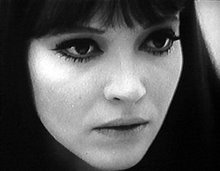
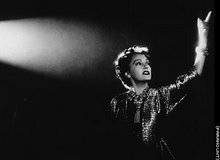
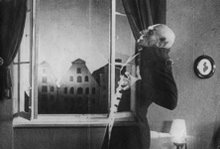
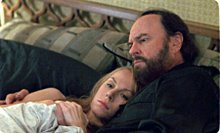
Above are some images from the films, Man With a Movie Camera (Dziga Vertov, 1929), Titicut Follies (Frederick Wiseman, 1969), Harlan County, U.S.A. (Barbara Kopple, 1976) , The Thin Blue Line (Errol Morris, 1988) and the television program Trauma: Life in the ER (TLC 2006).

Documentary film refers in general to all nonfiction film practices, all attempts to visually record, or "document" reality. The conventional assumption is that documentary is "objective," devoid of any subjective bias of the filmmaker and merely a faithful reflection of the "truth" of reality. However, throughout its history, the question of how any form of representation necessarily shapes, rather than simply records, reality has been at the center of all documentary work.

Narrative is selection after all, editing is fundamental to the work of both filmmakers and writers. One of my favorite television programs is the "reality" show Trauma: Life in the ER on the The Learning Channel. A friend of mine works on it: she's a documentary film maker who supports herself as a freelance editor. When I told her how much I liked it, she scoffed, "I hate it! We have to sort through around 5000 hours of film every week and shape it into two or three story lines. By the time I get done its total fiction!"

The fact/fiction barrier is, I hope you are learning, a highly permeable membrane. I think that's one of the points of the short story, "We Kill What We Love," which the fire drill prevented us from talking about in our last discussion session, but which maybe we can remember to talk about in this Tuesday's class. The images above this post are taken from films which illustrate the range of documentary practices throughout film history.

The earliest moving pictures shown to public audiences were by default documentaries. They were single-shot moments captured on film: a train entering a station, a boat docking, an airplane taking off, or mundane scenes of daily life. They were devoted to the sheer novelty of showing moving images of an event. Travelogues, scarcely edited footage of travel to "exotic" locations were probably the next film "form" to emerge: again the emphasis was on the novelty of the technology and the novelty of the experience it could provide an audience.

Shaping film into a narrative, a fictional narrative, followed soon after and early fiction films themselves followed established narrative forms: filmed versions of Great Literature or film scripts which mimicked the narrative structure of plays and novels. That film might have its own narrative language, that as a medium it might offer a different narrative modality are the motivations behind the first real cinematic experimentors, working interestingly enough, on the documentary and nonfiction side of things.

Dziga Vertov, working in the Soviet Union in the 20's and 30's believed the camera, with its varied lenses, shot-counter shot editing, time-lapse, ability to slow motion, stop motion and fast-motion, could render reality more accurately than the human eye and thus produced documentaries that exploit cinematic technique. His films are quite different than the static "aim the camera at the world and walk away" style that is now conventionally associated with documentary film. They transcend the notion that the camera should be limited to merely reproducing the human line of vision (which still dominates all filmmaking, fiction and nonfiction, today) and instead try to capture a "reality" more truthful in its visual representation of multiple images and multiple points of view. For Vertov, the films of people like D. W. Griffith were merely "cliches, copies of copies, films overly indebted to novels and theatrical conventions." Instead, cinema must have " its own rhythm, one lifted from nowhere else, and we find it in the movements of things."

Filmmakers like Frederick Wiseman and Barbara Kopple represent another strand in the tradition: the documentary as visual journalism. Both filmmakers immersed themselves in the culture of the events they filmed. Kopple and her crew spent years with the families of the Kentucky miners whose struggles she filmed in Harlan County U.S.A. In making Titicut Follies, Wiseman spent years fighting powerful institutional and governmental restrictions: not only to get into the Bridgewater State Hospital to film the inmates in the first place, but then to be able to even show his film once it was finished.

These documentaries aim to take viewers as completely as possible into situations outside of the safety of mainstream middle america to reveal the (often government-sanctioned) violence and abuse that is also a part of american society (the shot from Harlan County USA is Kopple and her crew being shot---literally). The visual and narrative style of these documentaries favor the immediacy of the hand held moving camera, following the drama of a situation as it unfolds and historical back story told by utilizing images of newspaper clippings and other archival forms of research.

Errol Morris's The Thin Blue Line is interesting for the way that it combines interviewed testimony with clips of news media coverage and re-enactments of essential plot moments. It explores the true story of the arrest and convinction of Randall Adams for the murder of a Dallas policeman in 1976 and the evidence and argument that it makes eventually led to the overturning of Adam's sentence and his release from prison. In many ways Morris pioneered what has become the dominant look and feel of nonfiction filmmaking, something we see in countless "reality" television programs and recent documentaries like those of Michael Moore and Morgan Spurlock.

I think one way to begin to think about Tarnation is in light of the entire tradition of documentary, one in which the mediated, or consciously crafted status of the image has long been under consideration.

(for some clips from some of the things discussed here, check my Vox blog Extra Things.)

We might also think about autobiography itself as a genre, but my thoughts on that will have to come in a separate post.

Friday, March 9, 2007

Some mp3's from Tarnation


I set up a Vox blog in order to have a place to post audio bits for students in this class. Right now I'm working my way through the Tarnation soundtrack and posting the mp3's as I find them (I thought I had all my Low CDs loaded into iTunes, but they aren't so I've got to houseclean to turn them up).

Later, I may use it as a space to post other film music and soundtrack audio files as we discuss them in class.

Here's a link to my Vox blog, Extra Things.

Thursday, March 8, 2007

The music of Tarnation

We've been starting to talk about music and soundtrack issues in film narratives (one of the elements which distinguishes them from written narratives). Because Tarnation makes such an extensive use of music, I thought I'd list all the songs here so you can think about them ahead of time. Unfortunately, Blogger, unlike Vox, doesn't let me embed mp3's or I'd set it up so you could actually hear them. There may be links I can put in later---I'll investigate over the weekend what the possibilities are, but for now here's a list of the songs and music used in the film.

(While Tarnation cost only slightly over $200 to make, being able to release it commercially brought a lot of extra expense. Caouette showed his first cut at Sundance and other "indie" film festivals where he attracted the patronage of Gus Van Sant and Jonathan Cameron Mitchell who helped him raise the money necessary to transfer his work to film and obtain music rights for the songs used, which, you won't be surprised to hear was the biggest expense of all. Even with around $400,000 spent obtaining song permissions and another couple thousand for film transfer, Tarnation still came in well under the catering budget of most Hollywood films.)

Low - "Laserbeam"
Iron and Wine - "Naked As We Came"
Glen Campbell - "Wichita Lineman"
Lisa Germano - "Reptile"
Cocteau Twins - "Ice Pulse"
from the musical Hair - "Frank Mills"
from the musical Hair - "Walking In Space"
Marianne Faithful - "The Ballad of Lucy Jordan"
HEX - "Diviner"
Low - "Embrace"
Angelo Badalamenti (Blue Velvet soundtrack) - "Mysteries of Love"
The Chocolate Watchband - "It's All Over Now, Baby Blue"
The Magnetic Fields - "Strange Powers"
Jean Wells - "After Loving You"
Dolly Parton - "A lil' Ole Pissant Country Place"
The Red House Painters - "Around and Around"
Low - "Back Home Again"
Mavis Staples - "How Many Times"
The Red House Painters - "Around and Around"
Hopewell - "Safe as Milk" (used in the film's trailer)

An original score and other incidental music was compsed by Max Avery Lichtenstein and John Califra.

Tarnation = $218.32


Almost the first thing anyone hears about Jonathan Caouette's film Tarnation, is that he made it on his Mac with pre-bundled iMovie software for a total cost of $218.32. That factoid alone speaks volumes about the potential future of "filmmaking" in an era of easily accessible, easy-to-use digital technology. As director Gus Van Sant remarked apropo Tarnation, “There are no longer home movies, but movies of the home.”

This future, of course, is only a possible one because perhaps even more than having access to material resources, people need to also have access to conceptual ones. Which means that as important as widely available, inexpensive image-capture and editing software is, it means nothing unless one can think beyond the conventions of bloated budget Hollywood blockbuster entertainment, a paradigm in which digital technology is equated only with SFX.

Tarnation is a kind of documentary. It is also a kind of autobiography, about Caouette's childhood, teenage years, and current life, and a kind of biography---about Caouette's mother Renee, a woman whose fragmented mental condition and shattered life was quite possibly caused by the psychiatric treatment she was given after a bad accident. Caouette's treatment of this standard "nonfiction" material, however, is strikingly original. He combines home movies, photographs, student films, video diaries, recreated scenes, and film and television clips with pop songs, incidental recordings like answering machine messages and title cards. In its use of image and sound collage, multiple image tracks, overlapping and fragmented visuals and sound, Tarnation could be said to have a "music video" aesthetic.

Tuesday, March 6, 2007

Narrative Conventions: Genre (film noir)


Another set of conventions that shape reader response is genre. You're probably familiar with many traditional ways of classifying both written and visual narratives: bookstores and video/DVD rental outlets often group their wares in loosely genre-defined sections. And too, you're probably aware of many of the conventions that structure specific genres when you stop and think about them. When you see a sci-fi film, or read a detective novel, or watch a horror movie, you know that there are certain situations, characters, themes, visual imagery and soundtrack styles that you expect to encounter.

Christopher and Jonathan Nolan's narratives reference and riff on the conventions of the hard-boiled detective story and its cinema counterpart, film noir. The wikipedia entry on noir is quite a good and extensive look at the genre's origin, history and major exemplars like Out of the Past (from which the screenshots above are taken). The conventions of film noir are not only thematic, but also visual.

Noir's signature dark and moody mise en scene is paired with stories of crime which unfold in a thoroughly corrupt world. Fatalistically doomed characters enact violent and brutal dramas of betrayal and double crossing. A lone hero confronts a world where nothing and no one can be trusted, where identity itself is the most unstable element of all. The world of noir is also a world of sexual menace where the threat posed by the femme fatale---a beautiful and sexually powerful woman---often turns out to be more dangerous than any fist fight, gun fire or master-minded conspiracy. Film noir is also characterized by its particular use of narrative structure: a first-person POV (often cemented with a voice-over narration), multiple flashbacks and plot twists, and other complications feed into the overall suspense of the plot.

Here is a short description and discussion of Out of the Past, as I said before, one of the classic examples of the genre. Think about what Memento may have in common with this film, and also where it breaks with or subverts genre convention:

(Also note that we will be seeing a film by Jacques Tourneur later in the semester, his noir-ish horror film, Cat People.)

"Out of the Past (1947) is one of the greatest, multi-layered film noirs of all time. The downbeat screenplay was based on Geoffrey Homes' 1946 novel Build My Gallows High, a book that consciously imitated Dashiell Hammett's The Maltese Falcon (1941). (An uncredited James M. Cain wrote some of the script.)

Director Jacques Tourneur, who collaborated with legendary producer Val Lewton, was well-known for his subtle horror films, including Cat People (1942) and I Walked With A Zombie (1943). (And this film marked the third and final time that Tourneur worked with cinematographer Nicholas Musuraca.) His masterful ability to create a doom-laden, dark, shadowy mood of terror, assisted by black and white cinematographer Nicholas Musuraca, is perfectly blended into this tragic film noir classic.

The quintessential classic film noir masterpiece from RKO, a definitive flashback film of melodramatic doom, contains all the elements of the genre. First and foremost, there is an irresistible but deadly, chameleon-like femme fatale (Greer) who is the object of romantic fascination for both a detective Mitchum) and a gangster (Douglas). Themes of betrayal, passion, and a cynical, perverse, and a morally ambiguous atmosphere are all interwoven and entangled together in a confusing and convoluted dark plot (mixing narrative flashback with linear narrative) with both double- and triple-crosses. Eventually, all three individuals meet their inescapable, tragic ends typical of a Shakespearean-level tragedy." Tim Dirks, from filmsite.org.

Monday, March 5, 2007

Soundtrack of our Lives


Perhaps we should do more work on the importance of music in film narratives. Anthony commented in his log this week that upon re-viewing The Inner Life of a Cell, the importance of musical cues was made more than obvious to him.

I just downloaded one of my favorite soundtracks to my iPod: Bernard Herrmann's score for The Day the Earth Stood Still. The Day the Earth Stood Still was the first science fiction film I ever saw and I can't emphasize enough what an impression it made on me at a very young age---and most of that impression was via the soundtrack. To say those sounds haunted me is not even close to the effect they had.

Herrmann is one of the classic soundtrack composers, forming in my mind a trinity with George Delarue and Peer Raben. (While I respect Herrmann's overall achievements, my heart is more truly given to Raben and Delarue. Raben for his entire work with Fassbinder and Delarue for the single most important cinema music in my life: the score to Godard's le Mepris. Two stills from it have pride of place on the right hand side of this blog, followed by several images from Fassbinder's work).

Anyway, walking around Nassau today with everything scored to the anxiety-producing theremin tones of Herrmann's score was quite an otherworldly experience.

And in some ways very fitting.

Blog as Narrative


This week we will be looking at a film which is partially structured as a reverse linear narrative. I wonder if any of you have thought about the reverse chronology of the blog format as a narrative form?

The traditional blog format is a rolling log (no pun intended): a dated space to list information where the newest entry pushes the older entries down the list. When you read a blog, you either read through it as it is formatted: from most recent to least, or you scroll down to find the post you last read and then read from "bottom to top" so you can preserve chronology or see any cause and effect (sometimes important if one post is a commentary on a previous one).

Blogs are such a ubiquitous form on the internet (note the 60 million in the wikipedia article in the screenshot above) that I wonder if reverse chronology is becoming the new linearity.

Any thoughts?